It has the most striking and complex patterns of brown again a background of light brown or green, producing an amazing visual feast.
Internationally described as marble, it is in fact harder and more durable than typical marble. It is more resistant to "etching" from acidic substances (lemon/vinegar) than standard marble, as it is silicate based rather than calcium based.
Formed by serpentization this metamorphic rock originates in relatively low temperatures on the sea bottom and gradually ascends to the surface over millions of years. It is a rock type made of one or more serpentine minerals - serpentinites. The name serpentinite derives from the visual grid-like shape of patterning, often reminiscent of snake's skin.
Experts recommend using a marble-specific sealer to protect it from moisture and oil-based stains.
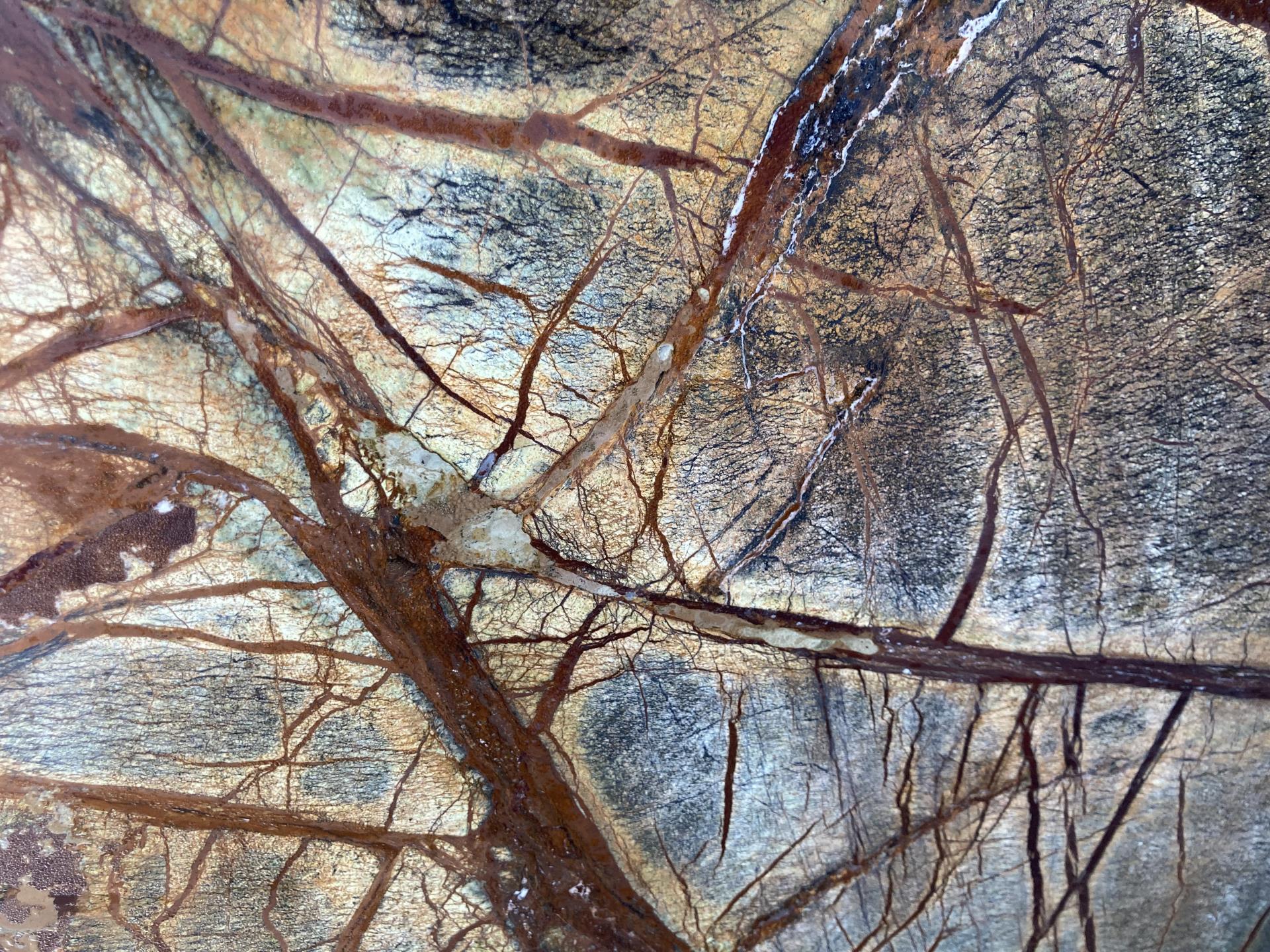 More robust than typical marble, softer than granite.
Metamorphic rock starts as another type of rock, usually called the 'parent' rock. This type of rock is never subjected to such high temperatures that it melts. Rather it is put under pressure or temperature that transforms the rock, which is often squashed and folded, into a denser and more compact version. This typically happens deep inside the earth near tectonic plates. The original minerals in the rock recrystalise and reorganise under the pressure or temperature, with many minerals becoming aligned with the rock itself.